Day Trips From

Tips and Advise for day trips from Venice by Road to Travel Inc.

Sunday, July 24, 2016

Sestiere Castello

Venices largest district, Castello has some of the finest architecture and art in the city, the busiest as well as least touristy areas.

The Arsenale di Venezia, the city’s historic shipyard is one Castello’s main sights. Built in the 12th century, the Arsenale was the heart of Venetian naval industry and one of the largest production centres of its kind in the world. Today it is spread over 40 hectares and used mainly by the Italian army. It can be difficult to access outside of the Biennale of Venice events but you can admire its majestic Porta Magna entrance all year round.

Arsenale di Venezia
Castello has many beautiful and important churches that are worth a visit. The 13th century Basilica di San Giovanni e Paolo dominates a charming square (campo), one of the largest in Venice, where you can sit observing the local life. Twenty five doges, many artists and senators have been buried in the Basilica between the 13th and 16th centuries. Beside it, stands the spectacular Scuola Grande di San Marco built by the Confraternity of San Marco in 1260, which today houses a civil hospital. Spend some time admiring the magnificent marble façade with elaborate statues and carvings. 

Scuola Grande di San Marco

To see some of the most impressive works by Giovanni Bellini, Tintoretto, Tiepolo and many other Venetian masters, head to the church of San Zaccaria. 

On a hot day, chill out in the Giardini Pubblici from which you can admire beautiful views of the Palazzo Ducale and St. Mark's Square. Walking through the garden towards the tip of the island you can see the national pavilions where exhibitions are hosted during Venice’s Biennale. It is one of the best spots to watch the sun go down colouring the city’s skyline in unforgettable pink hues.

Giardini Pubblici

The eastern residential part of Castello is quieter with an authentic Venetian feel. Via Garibaldi, the widest street in the city, is lined with small unpretentious shops, bars and lovely cafés that locals frequent. Here you can enjoy a relaxed atmosphere, watch a football match in a bar while devouring traditional delicious cicchetti (Venetian tapas-style snacks) and ombre (small glasses of wine).


Photos via Flickr by: Giorgio Bertossi, Michael Day, Kevin Harber.

Monday, June 27, 2016

Haunted places in Venice

Given Venice’s eventful past, no wonder it has so many places that, according to local legends, are haunted. Unleash your inner ghost buster and head to see them for yourself. Even if you are not lucky enough to meet any phantom in person, you will learn fascinating stories and see some stunning examples of Venetian architecture.

Cà Dario

One of the most famous haunted palaces in the city, the 15th century Cà Dario palace overlooking the Grand Canal has a Latin phrase written on one of the external walls which anagram reads as “Whoever lives under this roof, will find ruin” (“SUB RUINA INSIDIOSA GENERO”). The prediction turned out to be true for nine of palace’s owners who have died in strange circumstances or committed suicide between 1764 and 1993. Several others, who didn’t not die went bankrupt. Many locals believe that the spirits of the palace’s previous owners inhabit it and avoid it at any cost. 

Cà Dario
Casin degli spiriti

The name of this building means “the house of souls” in Italian for a reason. Some legends say that over many centuries various sects came to the house to get in contact with evil spirits and demons. 
Apparently, a ghost of Luzzo, a 16th century painter who killed himself because of unrequited love for Cecilia, his friend’s lover. The phantom wonders through the palace looking for his beloved and calling her name. Venetian fishermen do their best to avoid sailing past this isolated cursed house.

Palazzo Grassi 
Palazzo Grassi 

The grand 18th-century palace is home to a stunning private art collection and… a ghost of a young woman, who according to local legends was thrown from one of the building’s balcony and died in the courtyard. The museum’s guardians say that they hear a female voice calling them during night shifts. No one has seen or heard the apparition during the day when the gallery is open, so you might have to get a job in the Palazzo Grassi if you want to meet the spirit in person.


Photos by: Wikimedia Commons, Eric Salard/Flickr.

Friday, May 27, 2016

A day in Vicenza

The city of Vicenza is world-famous for its Palladian villas and is a great day getaway from Venice

Located on the edge of the Po plain, Vicenza has always been a prosperous city, from pre-Roman to modern days due to its rich natural resources and a strategic position near the powerful city of Venice.
 It earned its place on the UNESCO World Heritage list because of the splendid villas designed by Andrea Palladio in the 16th century that can be admired today in the city. 

Vicenza
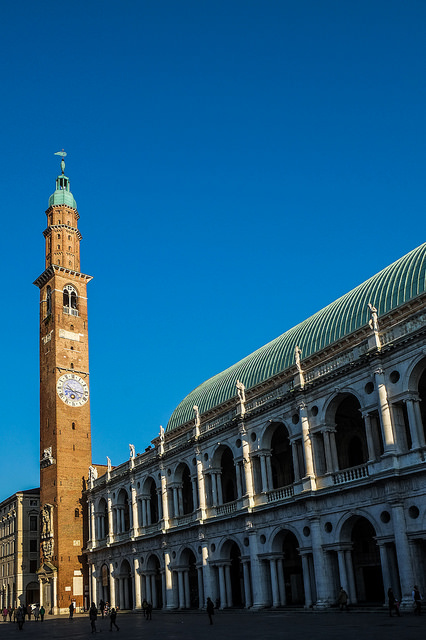
You do not need to be an architecture buff to enjoy the beauty of Palladian heritage. Stroll along Corso Andrea Palladio, the city’s main thoroughfare, lined by splendid palaces some of which were designed by the famous architect. One of his masterpieces, the Basilica Palladiana, dominates Piazza dei Signori, in the heart of the city. With its elegant colonnades, a 52-metre long hall with a wooden vaulted roof it leaves a long-lasting impression on visitors. Climb on to the top terrace for fine views of Vicenza. Palladio’s last work, the Teatro Olimpico, which was finished by his son, is also worth a visit. Its clever design and use of trompe l’oeil effect makes the interior look deceptively large. 

Basilica Palladiana
Across the road from the Teatro Olimpico  is the Museo Civico housed in the elegant Palazzo Chiericati. The museum boasts fine archaeological collections and works by such famous Venetian masters as Veronese, Tintoretto and Tiepolo. For an extra helping of art, head to the the Gothic Church of Santa Corona to see works by Bellini and Montagna. The stunning Basilica di S. Maria di Monte Berico, apart from some magnificent frescoes and a Veronese work, also has breathtaking views over the city.

Basilica di S. Maria di Monte Berico
No visit to Vicenza would be complete without sampling its excellent cuisine. You will see many typical Venetian dishes in restaurants, there are also some hearty fare that you will only find in Vicenza. Try the ancient dish of baccalà alla Vicentina, dried cod cooked in milk and olive oil to perfection, or bigoi co' l'arna, egg pasta with a rich duck sauce.


Photos via Flickr by: David Nicholls, Igor Zeiger, Stefano Bussolon.

Wednesday, April 27, 2016

A day in Chioggia

If you want to get off the beaten path and have a glimpse of authentic life of an ordinary maritime community in the Venetian Lagoon head to Chioggia. The town has canals, beautiful medieval churches and a couple of interesting museums; add to those the charming laid-back atmosphere reminiscent of old days, excellent seafood and you will understand why Chioggia makes a lovely day trip from Venice

Chioggia
Although Chioggia is often described as a “little Venice”, it doesn’t have as many architectural gems or priceless artefacts like its neighbour. Stroll down the town’s main street, Corso del Popolo, which runs through the island from north to south, to see beautiful churches and small artisan shops. 

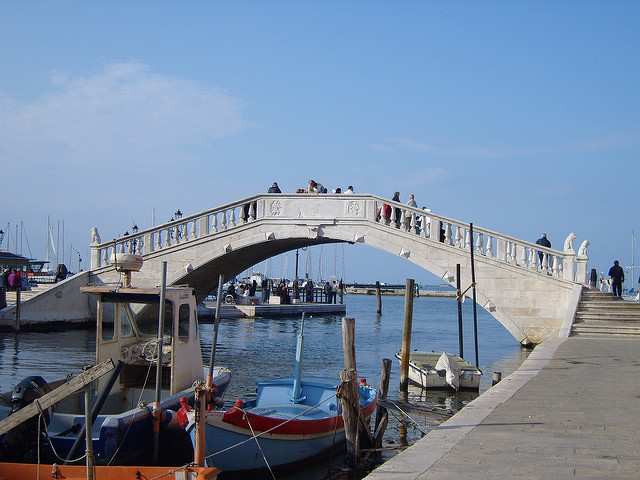
Pop in to the Chiesa di San Giacomo Apostolo to see fascinating ex-votos displayed on the walls. The painted votive offerings are tokens of gratitude to the Madonna della Navicella for miracles: escape from a fire or drowning boat, recovery from a grave illness. Another church that is worth a visit is the Chiesa di San Domenico sitting on a small island. There are works by Tintoretto and Bassano and an ancient wooden crucifix that locals believe to be the oldest in the world. Near the church, you can admire the white marble bridge with carved lions that crosses the Vena Canal lined up with fishing boats. 

The Marble Bridge
There is also an interesting small museum, Museo della Laguna Sud, in town where you can learn about the history of the southern part of the lagoon, see old boats and agricultural equipment.

Chioggia is renowned for its excellent seafood dishes. Make sure you visit the local bustling fish market to see locals stocking up on fresh fish on weekday mornings. At the market restaurants you can also sample excellent seafood, such traditional dishes as risotto a la ciosota (seafood risotto), cape sante al forno (scallops baked in cognac), bibarasse in cassopipa (clams cooked with onions). 


Photos via Flickr by: Patrick Giese, Fabio Veronesi.

Sunday, March 27, 2016

A day in Treviso

Located only 12 miles from Venice, Treviso is overshadowed by its famous neighbour and often overlooked by foreign visitors. This lesser-known gem has a lot to offer: Venetian-style aristocratic palaces, Renaissance squares, romantic canals and no crowds, tacky souvenirs or overpriced restaurants. 

Treviso
Distinctively Venetian in character, Treviso was under La Serenissima’s rule for a long time. The city walls were constructed during the Venetian Republic and today they add a unique charm to Treviso’s atmosphere. Venetians took advantage of the city’s position circled by two rivers, the Sile and the Cagnan, and used the waterways to navigate, transport merchandise and power flourmills. In one of the oldest parts of Treviso, you will find one of the most atmospheric landmarks, a bustling fish market that has been here for centuries. 

Piazza dei Signori
In the city centre, the beautiful seven-domed Cathedral of San Pietro, Il Duomo, is home to the Annunciation by Titian and a few other stunning masterpieces. Ancient elegant palaces surround the picturesque Piazza dei Signori: the 12th-century Palazzo dei Trecento, once the seat of Treviso's government, 15th-century Palazzo del Podestà, Renaissance Palazzo Pretorio. Stroll along the city's main street Via Calmaggiore to admire Renaissance palaces with their splendid facades and arched doorways.

Make sure to check out the Santa Caterina Museum that houses a beautiful 14th-century fresco cycle of the life of St Ursula by Tomaso da Modena, a follower of Giotto. After a dose of culture, take a break walking along Treviso’s charming canals with weeping willows and pretty parks.

Palazzo del Podestà
Treviso is home to the clothing empire Benetton and you will find its flagship store in a prominent position behind the Palazzo dei Trecento in the town centre. There are many upmarket boutiques where you can indulge yourself in retail therapy without breaking the bank.

To sample local cuisine head to the old trattoria Toni del Spin that serves excellent pasta with a duck sauce, mushroom risotto and game dishes. For delicious fresh seafood dishes try Mardivino.


Photos via Flickr by: Antonio Cinotti, Régine Debatty, Lizandro Chrestenzen.

Thursday, February 18, 2016

The Marriage of the Sea ceremony in Venice

For many centuries, in May, Venice has been celebrating the Feast of the Ascension (Festa della Sensa) with a beautiful ceremony called The Marriage of the Sea (Sposalizio del Mare). The festival goes back to the days of the Venetian Republic, La Serenissima, and commemorate two historical events.

The Return of the Bucentaur by Canaletto
In the year 1000, on May 9, the fleets dispatched by Doge Pietro II conquered Dalmatia defeating the Croatian and Narentine pirates that had been creating trouble for Venetian ships in the Adriatic. The second important event celebrated during the festivities took place in 1177 when Pope Alexander III and Holy Roman Emperor Frederick Barbarossa signed the peace treaty ending a century-long discord.

The Marriage of the Sea ceremony started with a procession sailing out of the lagoon, from St. Mark’s to the Church of San Nicolò on the Lido. It was led by the Doge’s golden ceremonial barge called “Bucentaur” (“Bucintoro” in Italian), which was like an opulent floating palace, 35 metres long and 8 metres high, with 168 oarsmen.  Historians say that La Serenissima built four Bucintoro boats with the last one being destroyed in 1798 by the Napoleon’s Army. Since then a more modest boat has been used for the ceremony, however, a project to build an exact replica of the last Bucintoro barge has been underway in Venice since 2008.

Festa della Sensa
Nowadays, the procession is presided by the Patriach of Venice and the Mayor with various civic dignitaries and military representatives who are followed by many beautifully decorated gondolas from the various rowing associations. During the mass at San Nicolò a golden ring is blessed and tossed in the water by the Mayor as a symbol of the city’s close ties with the sea and its historic marine dominance.

After the procession a four-oared gondolas regatta is organized which draws a lot of spectators. A big market is set up near the Church of San Nicolò where visitors can sample some Venetian gastronomic delights and soak up the festive atmosphere.


Photos by: Wikimedia Commons, Angelo Greco.

Tuesday, January 26, 2016

The best dishes to try in Venice

Venice is well known for its architectural gems, romantic canals and gondola rides. It is also a great city for food lovers as there are many good restaurants, trattorie and traditional wine bars (“bacari”) that serve delectable Venetian specialties that the city is famous for. Here is our pick of the best traditional dishes to try.

Venice

Polenta and schie 

Smooth corn polenta is a perfect match for tiny gray shrimps called “schie” from the Venetian lagoon. In the old days, poor fishermen ate the schie that were left at the end of the day from their catch. Today, some of the best eateries have this dish on their menu.

Sarde in saor

A typical Venetian sweet-sour dish made with fried sardines marinated in vinegar, onions, raisins and pine nuts. Its origins go back to medieval times when sailors and fishermen had to store fish for months away in the sea. Nowadays, it is served as an appetizer in many restaurants and bacari.

Sarde in Saor

Bigoli in Salsa

This simple wholegrain pasta dish with onions and salted sardines has been on Venetian tables since La Serenissima republic times. Today, it is more common to use anchovies instead of sardines.

Moeche 

If you happen to be in Venice in spring or late fall, do not miss this seafood delicacy. Moeche are soft shell crabs that are deep fried and served on their own, with a salad or polenta. 

Risi e Bisi

Risi e bisi 

Like most of Venetian food, this rice, pancetta, onions and green peas dish has a long history. For centuries, it used to be served in the Doges Palace on April 25, St. Mark’s Day. Many local restaurants offer risi e bisi all year around, however, to make sure you are getting the best quality, order it only in spring when green peas are in season.

Baicoli

Locals eat these dry biscuits dipped in coffee, dessert wines or zabaione cream. You can find them in restaurants or traditional bakeries in Venice. Centuries ago, baicoli were an important part of sailors’ ration during long journeys in the sea. 


Photos via Flickr by: Juan Salmoral, Cristina Rigutto, Wei-Duan Woo.

Sunday, January 17, 2016

The Doge’s Palace

The Doge’s Palace (Palazzo Ducale) is one of the top attractions in Venice where you can easily spend many hours wondering around surrounded by the Gothic splendour. Centrally located on the Piazza San Marco, the palace was the seat of the Venetian Republic’s government and the Doge’s residence for many centuries. 

Palazzo Ducale
The current building was constructed in the 14 -15th centuries and became a museum in 1923. The Doge’s Palace with its lavish interior décor, vast halls and priceless artworks by Venetian masters attract over a million visitors every year.

Before entering the palace, linger outside admiring its exterior with Istrian marble columns, arching windows, elaborate pink Verona marble patterns.

Scala dei Giganti
Scala dei Giganti, the impressive staircase flanked by statues of the gods Mars and Neptune leads to the main floor in the palace. The Chamber of the Great Council, built in the 14th century was where the lower house of the Venetian Parliament gathered. Measuring 53 meters in length and 25 meters in width, this is the largest room in the Doge’s Palace. The room could accommodate up to 1800 citizens entitled to vote. Here you can see Paradise by Tintoretto, the world’s largest oil painting, reaching twenty-two metres in length. The ceiling was painted by another Venetian master, Veronese.

The Council Chamber
On the second floor is the Council Chamber, one of the most spectacular chambers in the palace. Here the Doge received the most important state visitors. Here you can spend a long time admiring  the ceiling painted by Veronese as well as his stunning depiction of the Battle of Lepanto above the tribune and works by Tintoretto. The museum itinerary also includes the Doge’s apartments with exquisite painted ceilings, ornate fireplaces and paintings by Titian and Giovanni Bellini.

On a private tour you can also visit the underground dimly lit prison (“pozzi”) and see the cell where the infamous Casanova was kept captive and from which he eventually escaped.


Photos via Flickr by: Isabel Moguer, Kars Alfrink, Andrew Stawarz.

Thursday, November 19, 2015

Sestiere Cannaregio

Cannaregio is one of the six sestieri, or districts, of Venice located in the north of the city where you can get away from the maddening crowds and enjoy authentic Venetian life.

The area was settled in the 15th century, so Renaissance left a significant mark on Cannaregio’s planning making it more luminous and spacious than other sestieri. The great masters Titian and Tintoretto lived here.

Cannaregio
The Strada Nova opened in the 19th century is the main street in Cannaregio and the longest street in Venice. Here you will find many quaint shops, ice cream parlours, small bakeries and green grocers. The neighbourhood is home to the Jewish Ghetto with its five beautiful synagogues. The stunning Renaissance Church of Santa Maria dei Miracoli that has been recently restored is also located here. 

Another gem that is worth a visit is the Gothic Madonna dell'Orto Church built in the 14th century in red bricks with contrasting white stone decorations. Inside you can admire spectacular paintings by Tintoretto, who is also buried here.

Madonna dell'Orto
The famous Ca' d'Oro, one of the most beautiful palaces on the Grand Canal is found in Cannaregio. One of the best example of gothic architecture in Venice, the palace’s facade was once covered in gold (hence the name “golden house”). Today, the beautiful palace is home to the Galleria Giorgio Franchetti alla Ca' d'Oro. Stunning Ca' Vendramin Calergi and Palazzo Labia are also located in Cannaregio and are worth a visit.

Check out the charming small square Campo dei Mori with its pretty Palazzo del Cammello and three turbaned statues that, according to a local legend, are three brothers turned to stone as a punishment for their greed. 

Ca' d'Oro
In Cannaregio you will find some of the best Venetian bacari, typical small bars where local enjoy wine and snacks called “cicheti”. Alla Vedova (Cannaregio, 3912, Ramo Ca' d'Oro) serves delicious polpette (pork meatballs) and Venetian tripe. In Cantina Vecia Carbonera (2328, Cannaregio) try local artichokes and tiny panini with gorgonzola and leek. 


Photos via Flickr by: Rick Payette, Nick Bramhall, Jean-Pierre Dalbéra.

Sunday, November 15, 2015

Drinking the wine of Venetian nobles on Mazzorbo

Although located only a short vaporetto ride from Venice, the little-known island of Mazzorbo seems like worlds away. With only a few couple of hundred resident it is hard to believe that 1000 years ago Mazzorbo was a lively settlement with thousands of inhabitants.

Mazzorbo
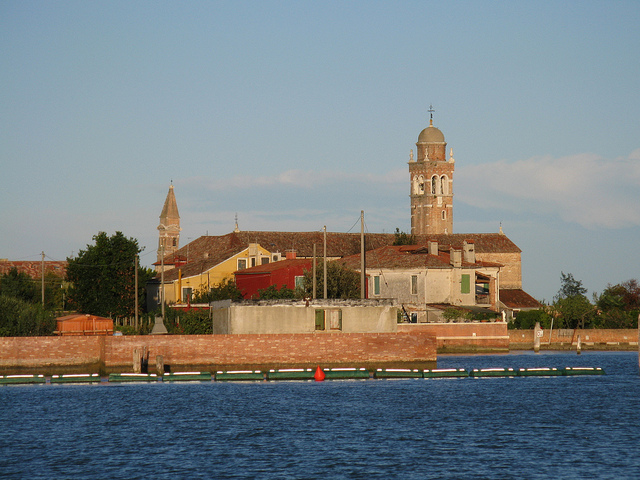
The island is connected to its more famous neighbour, Burano, with a long wooden footbridge and sees very few visitors. Winston Churchill used to come here with his easel to paint. Today, only the most curious tourists and people in the know arrive to this peaceful backwater to stroll along Mazzorbo’s few streets, wonder off to see cultivated fields and views over the lagoon, admire the 8th century Church of Santa Caterina and … drink the local wine that Venetian nobles used to love. 

Venissa Vineyard
Wine connoisseurs know Mazzorbo for Scarpa Volo, the ancient estate encircled by medieval walls, which has been lovingly restored by the Bisol family, well-respected prosecco wine producers. The Bisols have been making wine for 21 generations and stepped in to save the local vineyard a decade ago. Once a thriving farm with fruit orchards, a vegetable garden, fishpond and vines had been in decay for centuries when the new owners arrived. They restored the estate and put all their energy into reviving la Dorona, the “golden grape” as it was called by the Doges of Venice, which had been 
forgotten for a long time. 

It is not an easy task to keep a vineyard on Mazzorbo: the constant threat of high water (“l’aqua alta”) and elevated salt levels of the soil limit production. As a consequence, the yield from the vines here is one of the lowest in the world. Every year between four and five thousand bottles of Venissa, highly prized white wine, as well as red, are produced in the vineyard. The wine is sold in gold foil embellished bottles hand-made by a Murano glass master. The vineyard has a simple hotel and a restaurant where gourmet and wine connoisseurs flock to enjoy exquisite food and the ancient wine.


Photos by: Michael Day/Flickr, Venissa/Facebook.

Tuesday, October 27, 2015

Sestiere San Polo

The smallest of the six neighborhood (called “sestieri”) in Venice San Polo is also one of the oldest parts of the city. Spending a few hours here is like stepping back in time to discover La Serenissima’s past.

Rialto Bridge
Cross the Rialto Bridge, the oldest one to span the Grand Canal, from San Marco to explore the Rialto Market that has been here since the end of the 12th century. Make sure you arrive early in the morning before the hordes of tourists arrive, so you can enjoy a peaceful stroll between the stalls piled up high with fresh local fruit, vegetables, fish and listen to vendors banter with locals. 

The Campo San Polo is the second-largest square in Venice, after Piazza San Marco, once the venue for bullfights, masked balls and a market. Spend a few minutes here to admire the elegant palaces and 9th century Church of San Polo, which gave name to the sestiere and where you will find works by Tiepolo and Veronese. 

San Giacomo di Rialto
The city’s oldest church is located in this neighborhood. The Chiesa di San Giacomo di Rialto was supposedly consecrated in the 5th century, although it was re-built in 1097. Other attractions in the area are the Church of Santa Maria Gloriosa dei Frari with its important paintings by Titian and the Scuola Grande di San Rocco decorated with a famous cycle of paintings by Tintoretto.

Cichetti
San Polo is renowned for its small artisan shops, typical venetian osterie called bacari and some excellent restaurants. Make sure to do a bacari crawl to taste the best “cichetti”, local appetizers, accompanied by “ombra”, a small glass of wine. All’ Arco (Calle Arco, San Polo, 436) is located a few steps from the Rialto Fish Market and serves delectable appetizers with prawns, shrimps and squid. Cantina Do Mori (Calle dei Do Mori, San Polo, 429) is one of the oldest bacari in the city that 
the famous Casanova used to frequent. 


Photos via Flickr by: Paul Arps, Damian Entwistle, Sam Posnick.

Sunday, October 11, 2015

The Jewish Ghetto

The Jewish Ghetto (Il Ghetto) is one Venice’s quieter, less touristy neighbourhoods steeped in history. In 1516 the world’s first walled off Jewish community was instituted. Hundreds of Jews were locked on the small island patrolled by guards at night and only allowed to leave during the day for work in the city. They were allowed to run pawnshops, lend money for a very low commission, sell textiles and practice medicine. Despite the restrictions, Venice was still considered a safe heaven, attracting Jews from fleeing the Inquisition in Spain and Portugal, so the Ghetto grew. 

Ghetto - Canal View
With the densest population in the city, the Jewish community was allowed to build the tallest buildings in Venice with the synagogues on the top floors. In 1797, after Napoleon’s arrival the Ghetto’s gates were open but the complete liberation came only in 1866 when the Italian state was established.

Today only 30 Jews live in the former ghetto with several hundred others residing in other parts of Venice. However, Il Ghetto has remained virtually unchanged since the 16th century and become the centre of Jewish life in the city. There are two synagogues built in the 1500s that are still open for worshipping, an old people’s home, library, kosher guesthouse, two restaurants and a bakery where matzo, unleavened traditional bread is still baked in an ancient wood oven. There is also a small Jewish museum (Museo Ebraico) with an excellent collection of exhibits telling the history of Venetian Jewish community. You can see ornate silver Hanukkah lamps, Torah scrolls, beautiful wedding contracts in Hebrew.

Campo de Gheto Novo
Make sure to stop at one of the restaurants in the area. The famous Gam-Gam serves excellent traditional Jewish dishes such as matza ball soup, shnitzel and massa’bacha. Another good place to sample Venetian and Jewish cuisine is the Kosher Club Le Balthazar (Campo di Ghetto Nuovo, 30121) with its peaceful elegant courtyard.


Photos via Flickr by: Szilveszter Farkas, Joanna Penn.

Saturday, September 19, 2015

Cortina d’Ampezzo

Within a 3-hour drive from Venice lies the glamorous Alpine resort of Cortina d’Ampezzo. With 140km of ski runs, it is a popular destination for winter sports enthusiasts in winter. In summer months, keen hikers and mountain bikers arrive to the town to explore the vertiginous mountain trails with stunning panoramas across the Dolomite peaks. Even if you are not feeling fit enough to take on the rocky heights on foot, you can still reach the mountain peaks using cable-cars and buses.

Cortina 

You will not need much time to get familiar with Cortina, as the town is small with the main sights concentrated along the compact cosy town centre. Check out the pretty 18th century Church of Santi Filippo e Giacomo which belltower rising above the town’s rooftops. There is a modern Art Gallery and Palaeontological Museum both conveniently located in the same building and are certainly worth a look. You can also visit military sites and tunnels where battles were fought during the World War I. 

A chic resort for selected rich tourists since the 19th century, Cortina d’Ampezzo shot to fame after hosting the Winter Olympics in 1956. You will see photographs of the Games in many local restaurants, hotels and shops with the Olympic logo still proudly displayed at the stadium (Stadio del Ghiaccio ) which nowadays serves as a public skating rink.

Cortina

Corso Italia, the most popular street in the town, is lined up with glitzy upmarket boutiques, souvenir shops and trendy wine bars. Treat yourself to a meal in one of Cortina’s excellent restaurants that serve modern and traditional dishes. For a meal with a view head to one of mountain refuges and farms that offer hearty meals made with strictly local ingredients. El Brite de Larieto, a dairy farm surrounded by spectacular peaks, serves delicious meat and cheese. At Rifugio Scoiattoli you can order homemade pasta with blueberries and other traditional dishes with a twist.


Photos via Flickr by: Mariani Malinowski, Hans Porochelt.

Sunday, August 23, 2015

Mazzorbo Island

The little-known island of Mazzorbo is only a 40-minute vaporetto ride from Venice yet it feels like a world away. Few tourists disembark on the island heading instead to its more famous neighbours Burano or Torcello.

Once a large trading centre in the Venetian Lagoon, Mazzorbo lost its importance in the 10th century when trading activities were moved to Torcello. It became a holiday location for the Venetian nobles and nowadays is known for its beautiful vineyards, artichoke fields and fruit orchards supplying the city with fresh produce. The island is car-free and you can cycle or walk along stretches of neat cultivated land and few scattered houses in peace. Winston Churchill loved coming here with his easel to paint in silence.


Mazzorbo

Mazzorbo’s main attraction is the 8th century the Church of Santa Caterina restructured a few times but still retaining some original features and an ancient air about it. Sit here in silence and admire its 16th century marble floor worn with age, beautiful fading frescoes, elaborate carvings on the wooden confession box. The church’s bell tower built in 1318 is believed to be one of the oldest in the lagoon.
Every summer a country fayre is held on the island for both locals and visitors. There is music, games and, naturally, traditional dishes such as "Luganega e Costesine" (sausages and ribs) served with fried Polenta and washed down with local wine.


Wineyards in Mazzorbo

Mazzorbo is linked to Burano by an old long bridge called by the locals "Ponte Longo". Before you move on to Burano, make sure you sample the island’s delicious cuisine. The Michelin-starred Venissa Restaurant serves traditional dishes with a modern twist. Trattoria Alla Maddalena is is famed for its pasta with a wild duck sauce (“tagliatelle all'anatra selvatica”) and local artichoke, castraura of Mazzorbo, dishes. 
The Via della Vigna Winebar has excellent local wines and freshly caught fish.


Photos via Flickr by:  Michael Day, Hunter Nield.