Day Trips From

Tips and Advise for day trips from Venice by Road to Travel Inc.

Tuesday, October 27, 2015

Sestiere San Polo

The smallest of the six neighborhood (called “sestieri”) in Venice San Polo is also one of the oldest parts of the city. Spending a few hours here is like stepping back in time to discover La Serenissima’s past.

Rialto Bridge
Cross the Rialto Bridge, the oldest one to span the Grand Canal, from San Marco to explore the Rialto Market that has been here since the end of the 12th century. Make sure you arrive early in the morning before the hordes of tourists arrive, so you can enjoy a peaceful stroll between the stalls piled up high with fresh local fruit, vegetables, fish and listen to vendors banter with locals. 

The Campo San Polo is the second-largest square in Venice, after Piazza San Marco, once the venue for bullfights, masked balls and a market. Spend a few minutes here to admire the elegant palaces and 9th century Church of San Polo, which gave name to the sestiere and where you will find works by Tiepolo and Veronese. 

San Giacomo di Rialto
The city’s oldest church is located in this neighborhood. The Chiesa di San Giacomo di Rialto was supposedly consecrated in the 5th century, although it was re-built in 1097. Other attractions in the area are the Church of Santa Maria Gloriosa dei Frari with its important paintings by Titian and the Scuola Grande di San Rocco decorated with a famous cycle of paintings by Tintoretto.

Cichetti
San Polo is renowned for its small artisan shops, typical venetian osterie called bacari and some excellent restaurants. Make sure to do a bacari crawl to taste the best “cichetti”, local appetizers, accompanied by “ombra”, a small glass of wine. All’ Arco (Calle Arco, San Polo, 436) is located a few steps from the Rialto Fish Market and serves delectable appetizers with prawns, shrimps and squid. Cantina Do Mori (Calle dei Do Mori, San Polo, 429) is one of the oldest bacari in the city that 
the famous Casanova used to frequent. 


Photos via Flickr by: Paul Arps, Damian Entwistle, Sam Posnick.

Sunday, October 11, 2015

The Jewish Ghetto

The Jewish Ghetto (Il Ghetto) is one Venice’s quieter, less touristy neighbourhoods steeped in history. In 1516 the world’s first walled off Jewish community was instituted. Hundreds of Jews were locked on the small island patrolled by guards at night and only allowed to leave during the day for work in the city. They were allowed to run pawnshops, lend money for a very low commission, sell textiles and practice medicine. Despite the restrictions, Venice was still considered a safe heaven, attracting Jews from fleeing the Inquisition in Spain and Portugal, so the Ghetto grew. 

Ghetto - Canal View
With the densest population in the city, the Jewish community was allowed to build the tallest buildings in Venice with the synagogues on the top floors. In 1797, after Napoleon’s arrival the Ghetto’s gates were open but the complete liberation came only in 1866 when the Italian state was established.

Today only 30 Jews live in the former ghetto with several hundred others residing in other parts of Venice. However, Il Ghetto has remained virtually unchanged since the 16th century and become the centre of Jewish life in the city. There are two synagogues built in the 1500s that are still open for worshipping, an old people’s home, library, kosher guesthouse, two restaurants and a bakery where matzo, unleavened traditional bread is still baked in an ancient wood oven. There is also a small Jewish museum (Museo Ebraico) with an excellent collection of exhibits telling the history of Venetian Jewish community. You can see ornate silver Hanukkah lamps, Torah scrolls, beautiful wedding contracts in Hebrew.

Campo de Gheto Novo
Make sure to stop at one of the restaurants in the area. The famous Gam-Gam serves excellent traditional Jewish dishes such as matza ball soup, shnitzel and massa’bacha. Another good place to sample Venetian and Jewish cuisine is the Kosher Club Le Balthazar (Campo di Ghetto Nuovo, 30121) with its peaceful elegant courtyard.


Photos via Flickr by: Szilveszter Farkas, Joanna Penn.

Saturday, September 19, 2015

Cortina d’Ampezzo

Within a 3-hour drive from Venice lies the glamorous Alpine resort of Cortina d’Ampezzo. With 140km of ski runs, it is a popular destination for winter sports enthusiasts in winter. In summer months, keen hikers and mountain bikers arrive to the town to explore the vertiginous mountain trails with stunning panoramas across the Dolomite peaks. Even if you are not feeling fit enough to take on the rocky heights on foot, you can still reach the mountain peaks using cable-cars and buses.

Cortina 

You will not need much time to get familiar with Cortina, as the town is small with the main sights concentrated along the compact cosy town centre. Check out the pretty 18th century Church of Santi Filippo e Giacomo which belltower rising above the town’s rooftops. There is a modern Art Gallery and Palaeontological Museum both conveniently located in the same building and are certainly worth a look. You can also visit military sites and tunnels where battles were fought during the World War I. 

A chic resort for selected rich tourists since the 19th century, Cortina d’Ampezzo shot to fame after hosting the Winter Olympics in 1956. You will see photographs of the Games in many local restaurants, hotels and shops with the Olympic logo still proudly displayed at the stadium (Stadio del Ghiaccio ) which nowadays serves as a public skating rink.

Cortina

Corso Italia, the most popular street in the town, is lined up with glitzy upmarket boutiques, souvenir shops and trendy wine bars. Treat yourself to a meal in one of Cortina’s excellent restaurants that serve modern and traditional dishes. For a meal with a view head to one of mountain refuges and farms that offer hearty meals made with strictly local ingredients. El Brite de Larieto, a dairy farm surrounded by spectacular peaks, serves delicious meat and cheese. At Rifugio Scoiattoli you can order homemade pasta with blueberries and other traditional dishes with a twist.


Photos via Flickr by: Mariani Malinowski, Hans Porochelt.

Sunday, August 23, 2015

Mazzorbo Island

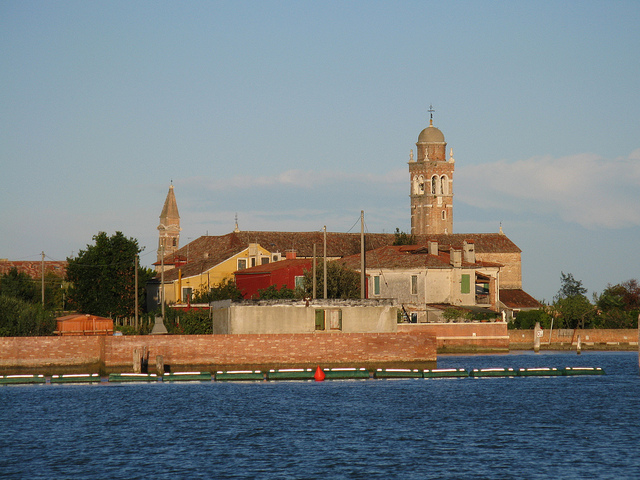
The little-known island of Mazzorbo is only a 40-minute vaporetto ride from Venice yet it feels like a world away. Few tourists disembark on the island heading instead to its more famous neighbours Burano or Torcello.

Once a large trading centre in the Venetian Lagoon, Mazzorbo lost its importance in the 10th century when trading activities were moved to Torcello. It became a holiday location for the Venetian nobles and nowadays is known for its beautiful vineyards, artichoke fields and fruit orchards supplying the city with fresh produce. The island is car-free and you can cycle or walk along stretches of neat cultivated land and few scattered houses in peace. Winston Churchill loved coming here with his easel to paint in silence.


Mazzorbo

Mazzorbo’s main attraction is the 8th century the Church of Santa Caterina restructured a few times but still retaining some original features and an ancient air about it. Sit here in silence and admire its 16th century marble floor worn with age, beautiful fading frescoes, elaborate carvings on the wooden confession box. The church’s bell tower built in 1318 is believed to be one of the oldest in the lagoon.
Every summer a country fayre is held on the island for both locals and visitors. There is music, games and, naturally, traditional dishes such as "Luganega e Costesine" (sausages and ribs) served with fried Polenta and washed down with local wine.


Wineyards in Mazzorbo

Mazzorbo is linked to Burano by an old long bridge called by the locals "Ponte Longo". Before you move on to Burano, make sure you sample the island’s delicious cuisine. The Michelin-starred Venissa Restaurant serves traditional dishes with a modern twist. Trattoria Alla Maddalena is is famed for its pasta with a wild duck sauce (“tagliatelle all'anatra selvatica”) and local artichoke, castraura of Mazzorbo, dishes. 
The Via della Vigna Winebar has excellent local wines and freshly caught fish.


Photos via Flickr by:  Michael Day, Hunter Nield.